

THE 1%ERS
The extra effort is what wins. The skill is knowing which 1% is worth it, and what it is measured against.

The Signal by Andrew Braun. One business framework per week, for people looking to better understand the intersection of business, customers and technology.
For the best part of thirty years I played AFL. Not at the top level, but long enough to learn how games are actually won. The coaches had a word for it: the one-percenters. The chase-down tackle when you are already cooked, the extra sprint at training in the rain, the kick at goal you stay back to practise after everyone else has gone home. None of them wins the game on its own. Added up, they are the difference between the team that wins and the team that was almost as good.
At work the same small margins decide outcomes, and most people treat them as optional. The job was basically done, the deck was good enough, the feature shipped did its function. We tell ourselves the last stretch is a nice-to-have, the preserve of perfectionists, where perfection has become a slightly dirty word, shorthand for someone who cannot let go and will not hit a deadline. There is truth in that. Chasing perfection for its own sake is a good way to miss the point and the deadline at the same time.
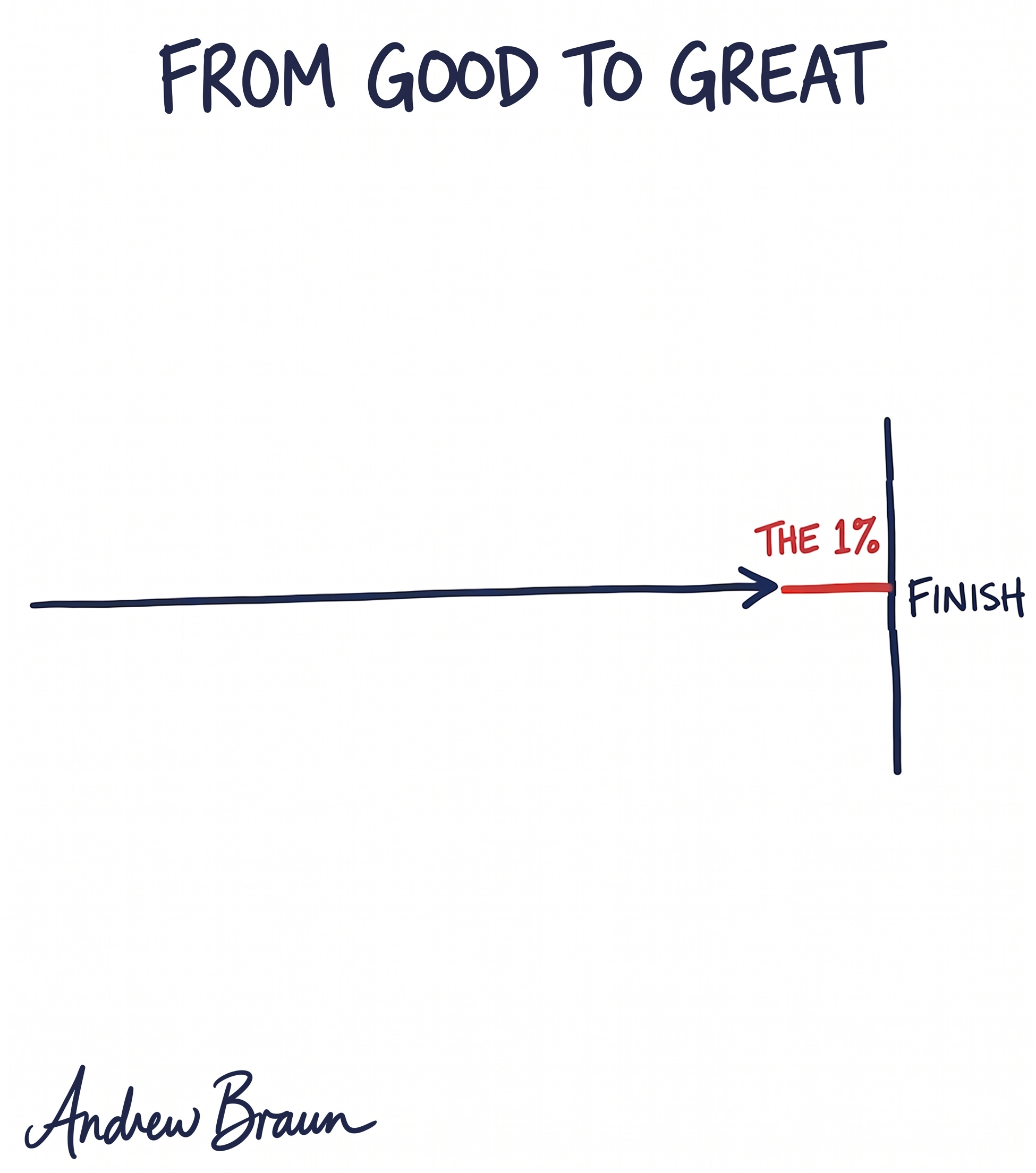
The 1% and perfection is relative
The one-percenter is not perfectionism, it is finishing. It is not dropping the ball in the last minute and letting someone else pick it up, or worse, no one pick it up. It is keeping your eye on the outcome when the easy thing is to call it done. It is not shipping a product or feature under the guise of ‘MVP’ whilst it doesn’t really address the true opportunity. It is rereading a blog article for the second or third time. The gap between good and great is usually small, but is often the hardest part to nail, often taking tenacity and resilience.
However, the extra effort to deliver on the 1% must be relative to something. Perfect relative to your competition’s effort, perfect relative to what your customer demands, perfect relative to what the budget or timeframe allows. It is not being perfect to just your own private standard. So before you chase the extra polish, ask what it is relative to: your competitors, your timeframe, and the risk if you get it wrong.
“The 1% only counts for something when it is measured against what you are actually trying to beat.”
Small margins, added up
When Dave Brailsford took over British Cycling, the program had won a single Olympic gold in seventy-six years. His method, the aggregation of marginal gains, was almost boring: improve everything touching the bike by one percent, the seat, the tyres, even the way riders washed their hands to avoid getting sick, and let the gains add up. Within a few years British cyclists were winning Olympics, and Team Sky took five Tour de France titles in six years. None of those one percents won a race by itself. Together they were the race.
Early in Apple's history, Steve Wozniak was laying out the motherboard. Steve Jobs insisted the layout be aesthetically pleasing and symmetrical. Wozniak argued it was a waste of time, but Jobs believed that the craftsmanship and care should carry all the way through, even to hidden components. He had learned it from his father, a carpenter who would not use cheap wood for the back of a cabinet, even though it faced the wall.
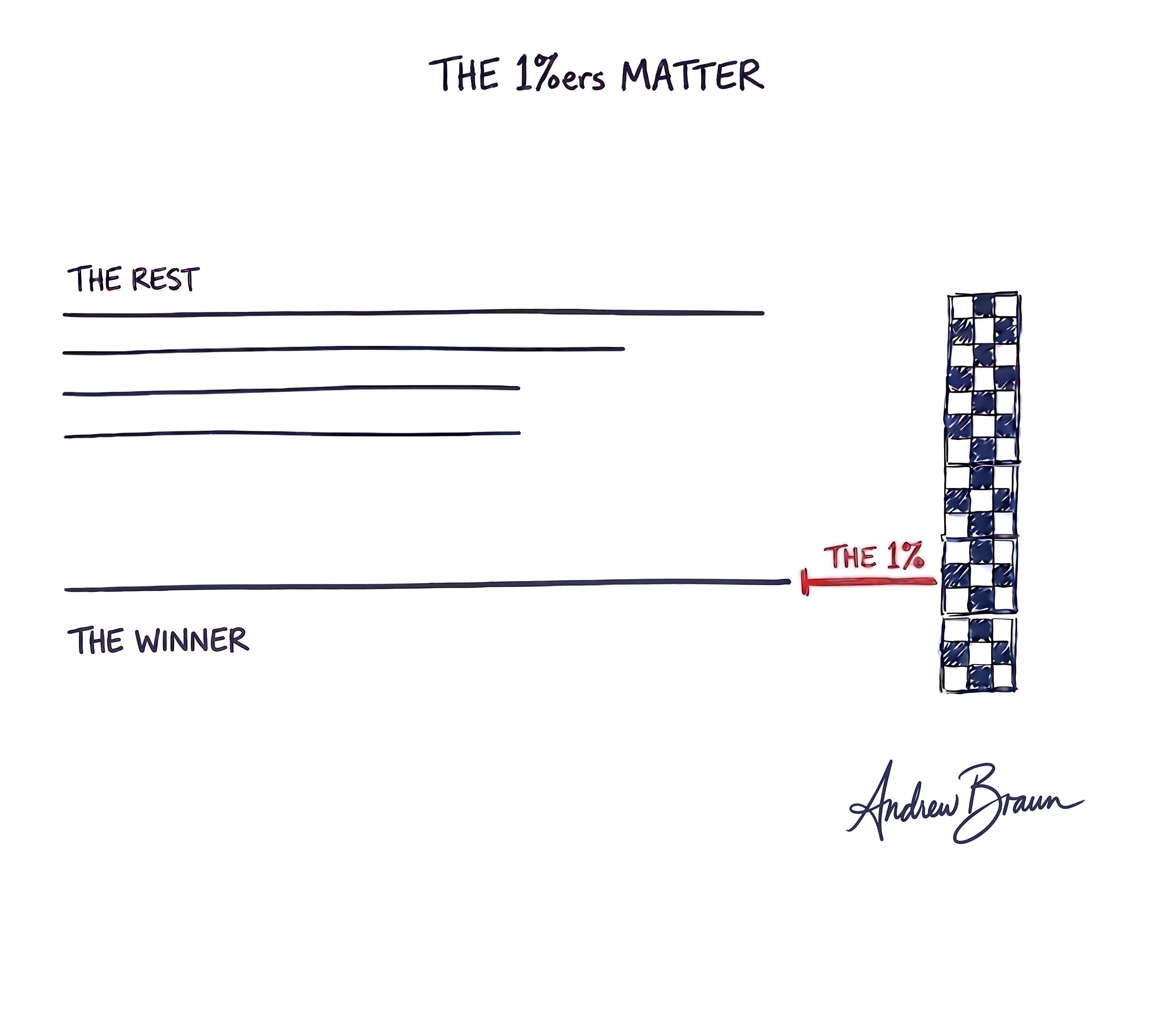
The discipline is knowing which one percent is worth it. A social post that needs to be fast and frequent does not need to be pixel-perfect and word-perfect; the polish that would make a board paper sharper would only make the post late and no better.
“The same effort is right in one place and wasted in the other, because the standard is set by the job, not by your pride.”
And you cannot judge which one percent matters unless you know the detail. This is the unglamorous part: reading the whole thing, asking why, putting yourself in your customer’s shoes, testing the assumption everyone else skimmed past. When you know the material better than your peers, your suppliers, or your boss, you can tell the difference between the polish that changes the outcome and the gold-plating that just delays it. Own the detail before you delegate it, because you cannot delegate a judgement you are not equipped to make.
Atomic Habits by James Clear is deeply linked to this premise, that tiny, 1% changes can compound into massive results over time. One of his major themes is that “you do not rise to the level of your goals, you fall to the level of your systems.”
If you apply one thing from this
Before you pour effort into the last stretch, decide whether this is the one percent that wins:
Finish the job. The one-percenter that matters most is simply not dropping the ball at the last minute.
Define perfect relative to something: your competitors, your timeframe, customer needs, past performance, and the risk if it goes wrong.
Match the standard to the job. Fast and frequent for some work, pixel-perfect for the rest.
Time-box the polish. The last 20% of finish often costs 80% of the effort, so decide what earns it.
Know the detail well enough to judge which one percent actually changes the outcome.
Own the detail before you delegate it.
The fair objection
Some may say that this is perfectionism with better branding, and that chasing the extra one percent is how good people burn out and good work ships late. They are right to worry. Unbounded polish is a trap, and plenty of over-engineered work dies of it.
That is the whole reason the one percent has to be relative and time-boxed. The skill is not effort, because anyone can pour in more hours; it is judgement, knowing when the extra tackle wins the game and when it just leaves you too tired for the next one.
“The one-percenters do not win because they are perfect. They win because they cared enough to finish, and because they knew which one percent was worth the pain.”
Everyone can see the extra tackle after it works. The trick is knowing, in the moment you are already exhausted, whether this is the one that wins the game.
Soundtrak by Andrew Braun works at the intersection of business, customers, and technology - where strategy actually lives. For CEOs, CMOs, and founders building something that compounds. We find the signal. We build the soundtrack.
Previous editions:


