

THE CONTRACT IS THE FLOOR
How To Invest in Supplier Relationships That Compound in Quality Over Time.

The Signal. One business framework per week, for people looking to better understand the intersection of business, customers and technology.
The production company we hired in year one was good at their job, however understandably they had limited industry context - limited audience knowledge, and limited understanding of what the work was actually trying to achieve. The result: output that was technically sound but it took too long with numerous iterations.
The failure was ours, not theirs.
We’d handed them four pages and assumed the craft would fill the gaps. But you can’t expect the craft to fill the gaps as the brief is the only mechanism for moving industry knowledge, audience insight, and competitive context from a client who has it to a supplier who doesn’t. A thin brief doesn’t just constrain the output, it makes the supplier’s skills hard to showcase.
Beyond the brief. New marketing manager, procurement manager, CFO or just a change in policy leads to: competitive tenders to keep costs in check, annual supplier reviews to maintain quality standards, and rotating rosters to prevents dependency. The standard approach to supplier relationships has a clean logic where the supplier is a service the business buys, and the purchase decision is managed like any other cost.
Poort briefs and a standard operating model produces adequate work, rarely excellent work, and never co-creation with the supplier.
Part of the team
The distinction between a vendor and a partner isn’t contractual, it’s operational. A vendor executes the brief, while a partner contributes to it. A vendor delivers what was asked for, while a partner brings things that weren’t asked for because they’ve been close enough to the business long enough to see what’s needed.
Getting to that relationship requires three things: time in the relationship (not a regular rotation), fair compensation (not negotiating to the floor), and active client involvement (not handing off and waiting for delivery).
“The contract covers what the supplier will do for the money; the relationship determines what they’ll do beyond it.”
That territory beyond the contract, the unprompted idea, the late night on a problem that’s technically yours, the event they proposed because they’d spotted the market opportunity before you articulated it, that’s where the compounding happens. You can’t commission it; you can only create the conditions that make it possible.
What accumulates overtime
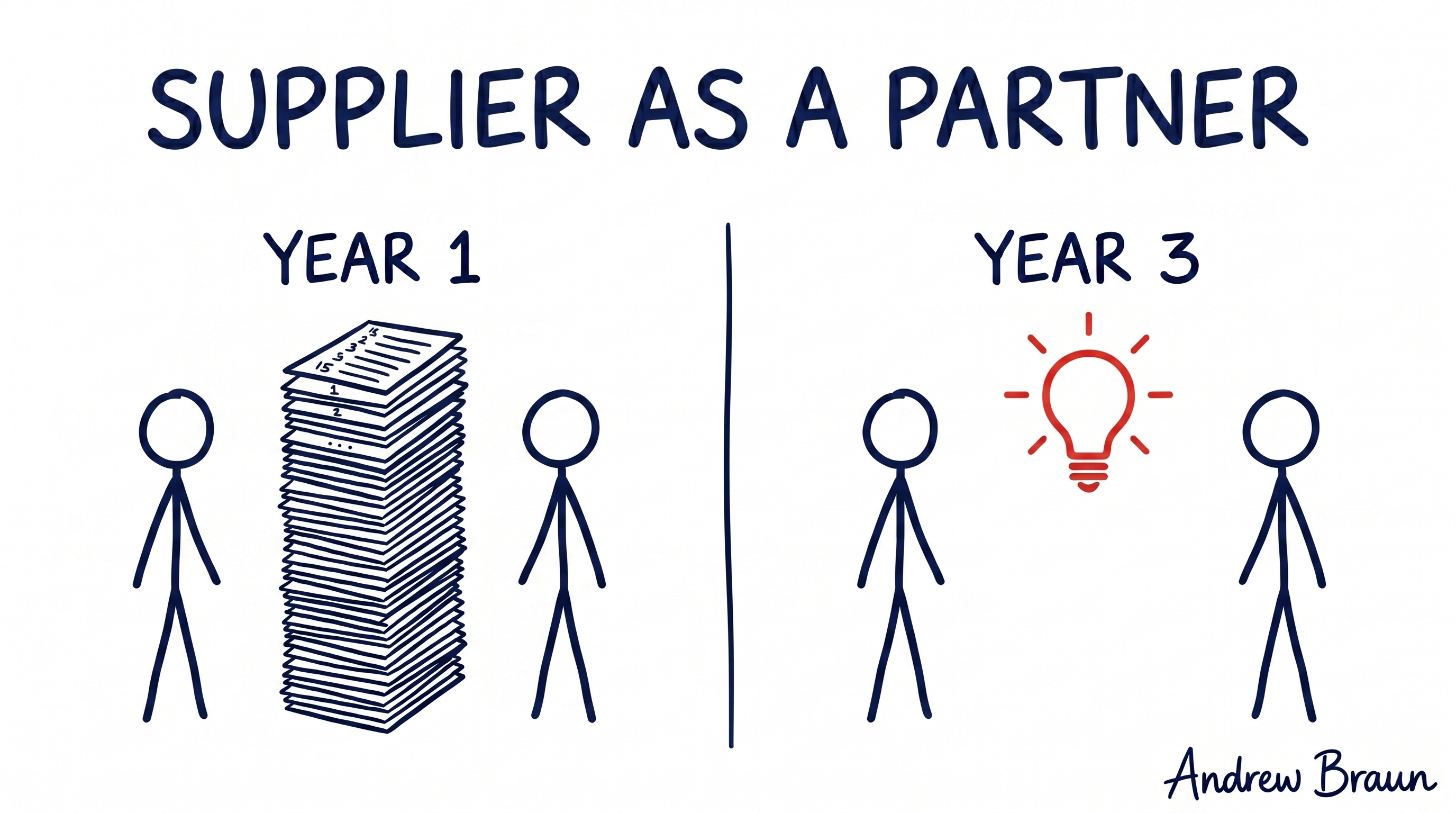
Year one with any supplier is their learning curve. They’re absorbing your industry, your audience, your brief style, and the internal context that shapes what can actually be approved. The brief is the primary transfer mechanism, moving knowledge from a client who understands the territory to a supplier who doesn’t yet.
By year three, that transfer is largely complete: the brief gets shorter, the quality gets higher, and something starts happening that no brief can produce. The supplier begins seeing opportunities you haven’t spotted, because they know the territory well enough to generate ideas that weren’t asked for.
“By year three, the brief gets shorter. Not because the supplier is cutting corners, but because they no longer need you to explain the basics.”
The year-three supplier is more useful than efficient, and the cost of rebuilding that context with a new supplier is never on the spreadsheet.
What it looks like in practice
At Netwealth, the video production crew, the trade media partners, the copywriters, and the core design agencies stayed constant across multiple years. Not because change was uncomfortable, but because we understood something about how creative relationships work: the first project is always the worst.
Both sides are learning each other. The supplier is absorbing your brand, your audience, your tolerance for creative risk, and the internal context that shapes what can actually get approved. You’re learning how they think, what questions they ask, and how much direction they need.
“Year 1 is the worst version of the relationship, so don’t be like most organisations and evaluate the relationship and conclude the supplier isn’t good enough.”
The Momentum Media partnership ran long enough to produce something that couldn’t have been commissioned. They came to us with a proposal: they’d run a conference for the adviser market, bear the event risk, and we’d come in as founding sponsor. The Adviser Innovation Summit ran successfully for three years, where we co-created in true partnership. From this we’d learned what good looked like, and the production knowledge from that event became the foundation for Netwealth’s own annual proprietary conference.
A supplier who proposes a co-investment has crossed into territory that has nothing to do with a contract. That only happens when they understand the business well enough to spot the opportunity and trust the relationship enough to put their own capital alongside it. The relationship had to reach that point, and reaching it required years of fair dealing, thorough briefing, and staying actively involved in the work rather than handing off and waiting.
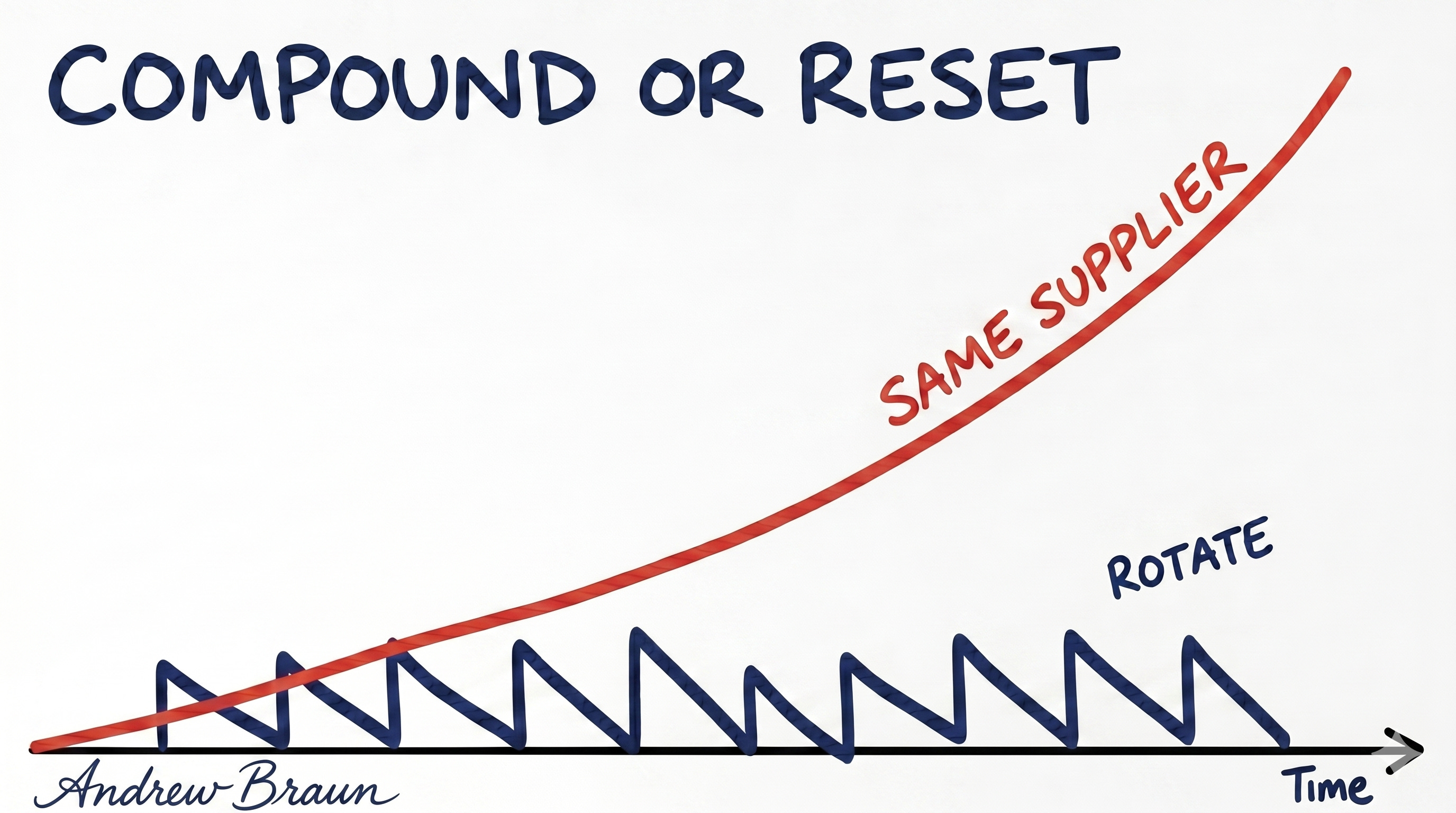
“The saving from rotating suppliers shows on the contract. The cost is what the contract was about to start producing.”
If you apply one thing from this 🛠️
Several things that separate a transactional supplier relationship from one that actually compounds, especially for marketing teams:
🛠️Negotiate fairly, not aggressively. Win-win pricing isn't a concession; it's insurance. The supplier who feels fairly compensated stays engaged when the project gets hard and when you need it most, while the one who feels undercut does the minimum and moves on.
🛠️Brief thoroughly and stay involved. You have the industry knowledge, the audience insight, and the competitive context the supplier doesn’t. Even as the relationship matures, you still have the insider knowledge. The brief is how you transfer it. Stay involved: review, guide, give feedback.
🛠️A multi-year mindset. As their first project won't be their best work, evaluate the relationship at eighteen months, not six. The compounding starts when both sides understand each other well enough to skip the preamble, and have honest conversations.
🛠️ Choose smaller suppliers where you can eyeball the person doing the work. Account management layers between you and the creative aren't just inefficient: each layer is a translation, and something can get lost in each one.
🛠️ Don't rotate suppliers to save small percentages. The cost of rebuilding context with a new supplier consistently exceeds the cost savings.
🛠️ Seek exclusivity and multi-year deals. A media partner running your ad campaigns alongside three direct competitors has different incentives than one whose commercial success is tied to yours.
The fair objection is dependency
Once a supplier knows they’re embedded, the incentive to stay sharp might disappear. However this is a relationship problem, not a structural one. Complacency happens when the feedback cycle breaks down: when the client stops being actively involved, where the brief gets thinner, and the relationship drifts into maintenance mode instead of creative mode. That’s not the supplier’s natural state, but can happen when you stop doing your part of the job.
The simple answer is an active relationship, not an annual tender.
We didn’t rotate suppliers annually to save 5%.
We invested in relationships that compounded in quality over time.
Soundtrak by Andrew Braun works at the intersection of business, customers, and technology - where strategy actually lives. For CEOs, CMOs, and founders building something that compounds. We find the signal. We build the soundtrack.